

Driver assistance features, explained
What NHTSA says these features do, and who is driving.
Disclosure: We may earn a commission if you buy through links on this page. It does not change our guidance. Affiliate Disclosure
Names differ
NHTSA says that when shopping for a vehicle, you may notice that "different manufacturers use different names for the technologies." We use NHTSA's names.
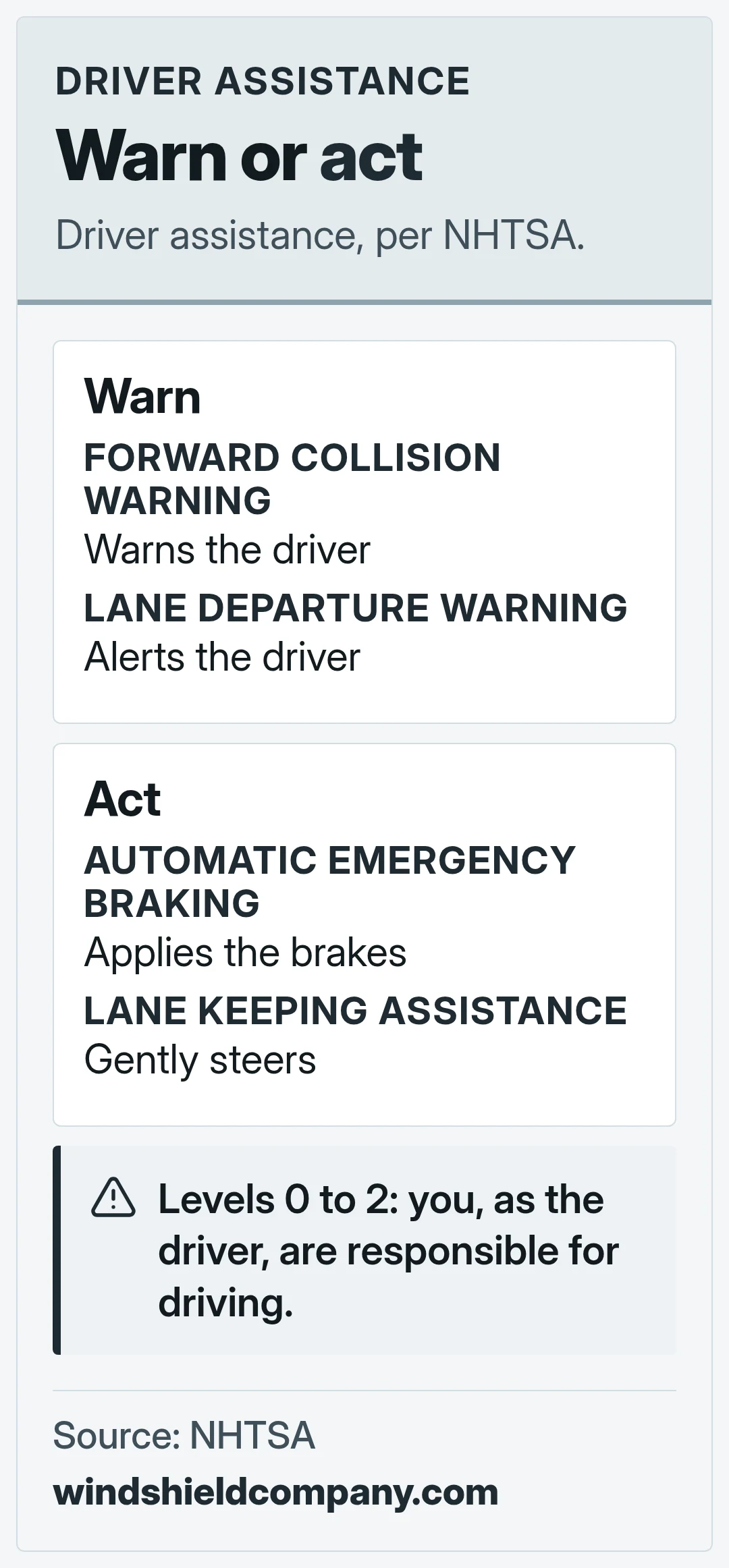
Warn or act
NHTSA says "some driver assistance technologies are designed to warn you if you're at risk of an impending crash, while others are designed to take action to avoid a crash."
Forward collision warning
NHTSA says forward collision warning "Detects a potential collision with a vehicle ahead and provides a warning to the driver." It says these systems "only provide a warning to the driver and do not take action to avoid a crash."
Who is driving
For Levels 0 to 2, NHTSA says: "You, as the driver, are responsible for driving the vehicle." It says Level 3 to 5 technologies are not available on today's vehicles for consumer purchase.
Your owner's manual
NHTSA says: "Be sure to review your vehicle's owner's manual for more information on your vehicle's technology and safety features."
After glass work
We do not say whether any vehicle needs calibration after glass work. Follow your vehicle maker's instructions and owner's manual. Our calibration guide has more.
Sources: NHTSA, Driver Assistance Technologies.
FAQ
General information only. We are not a glass shop, insurer, or agent, and we do not schedule, quote, or refer. Whether your policy covers glass damage, and what you would pay, depend on your policy and your insurer; read your policy and ask your insurer or agent. If your vehicle has driver assistance features, follow your vehicle maker's instructions and owner's manual on any calibration after glass work.



Next: calibration after glass work
Your vehicle maker decides.
