

Auto glass and your vehicle warranty
What the FTC says about warranties, aftermarket parts, and records.
Disclosure: We may earn a commission if you buy through links on this page. It does not change our guidance. Affiliate Disclosure
What a warranty is
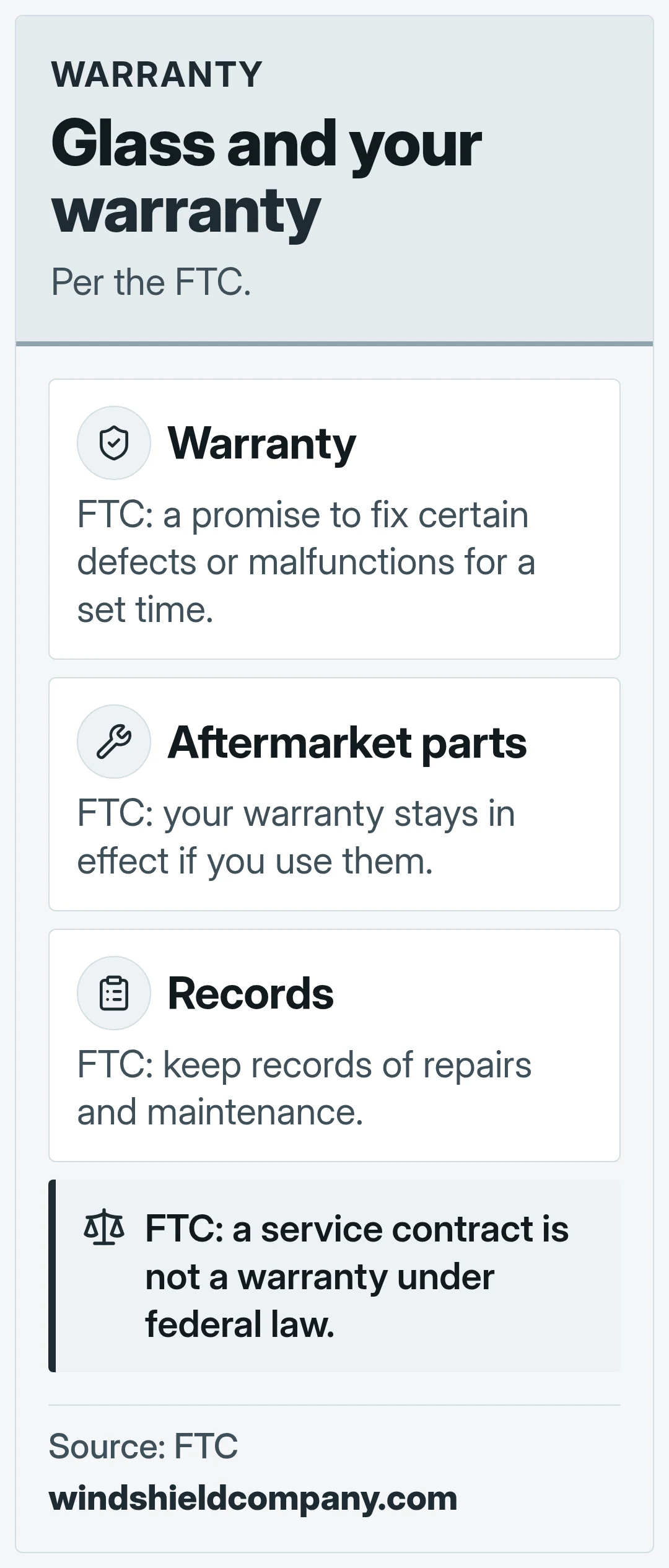
The FTC says: "An auto warranty is a promise to fix certain defects or malfunctions during a specific timeframe after you buy a vehicle."
Who does the work
The FTC says: "You don't have to use the dealer for repairs or maintenance to keep your warranty in effect." It also says: "But if the warranty says that the work will be done for free, the dealer or manufacturer can make you use repair facilities it chooses. And if the warranty says you will get parts for free, the dealer or manufacturer can require you to use parts it chooses." Read your warranty.
Aftermarket parts
The FTC says: "An aftermarket part is a part made by a company that didn't make your vehicle." It says: "Your warranty stays in effect if you use aftermarket or recycled parts."
When a part causes damage
The FTC says that if someone installs a defective aftermarket or recycled part, or does not install a part correctly, "it could damage a part that the warranty covers," and the manufacturer or dealer can deny warranty coverage for the damaged part. It adds: "The manufacturer or dealer must prove the aftermarket or recycled part caused the damage before they can deny warranty coverage."
Keep records
The FTC says to "Keep records of repairs and maintenance" and that the records will help if you have to use your warranty.
Service contracts
The FTC says an auto service contract, sometimes sold as an "extended warranty," is not a warranty as defined by federal law, because you buy it separately.
FAQ
General information only. We are not a glass shop, insurer, or agent, and we do not schedule, quote, or refer. Whether your policy covers glass damage, and what you would pay, depend on your policy and your insurer; read your policy and ask your insurer or agent. If your vehicle has driver assistance features, follow your vehicle maker's instructions and owner's manual on any calibration after glass work.



Next: OEM vs aftermarket glass
Two words, plain facts.
